





China’s top Electric Mill Roll Stand manufacturers are reshaping modern rolling lines through stronger control, faster adjustment, and smarter maintenance. Their equipment supports steel, aluminum, copper, and other demanding production environments. A reliable stand must hold the roll firmly, respond quickly, and maintain accurate pressure during continuous operation.
Dr. John G. Lenard, a respected rolling-technology author and engineer, emphasized a practical principle: “Stable rolling begins with controlled force, accurate alignment, and repeatable adjustment.” This principle remains highly relevant when evaluating Chinese suppliers. Engineers should inspect motor response, screw-down accuracy, housing stiffness, bearing protection, and emergency-stop performance. A polished brochure is not enough.
On a factory floor, the details become visible. The stand should move smoothly without harsh vibration. Operators should read position data clearly beside the mill. Lubrication points should remain accessible, even after long production shifts. Remote diagnostics can reduce downtime, but only when sensors are calibrated and service teams respond quickly.
The best manufacturers combine engineering experience with documented testing. They provide drawings, load data, commissioning support, and replacement-part guidance. Yet no supplier is perfect. Some specifications may look impressive but lack independent verification. Buyers should request trial records, customer references, and material certificates before making a decision.
This guide examines China’s leading Electric Mill Roll Stand manufacturers through performance, customization, quality control, and after-sales capability. It also considers a less comfortable question: does the equipment remain dependable when production conditions become unstable? That answer often matters more than the initial purchase price.
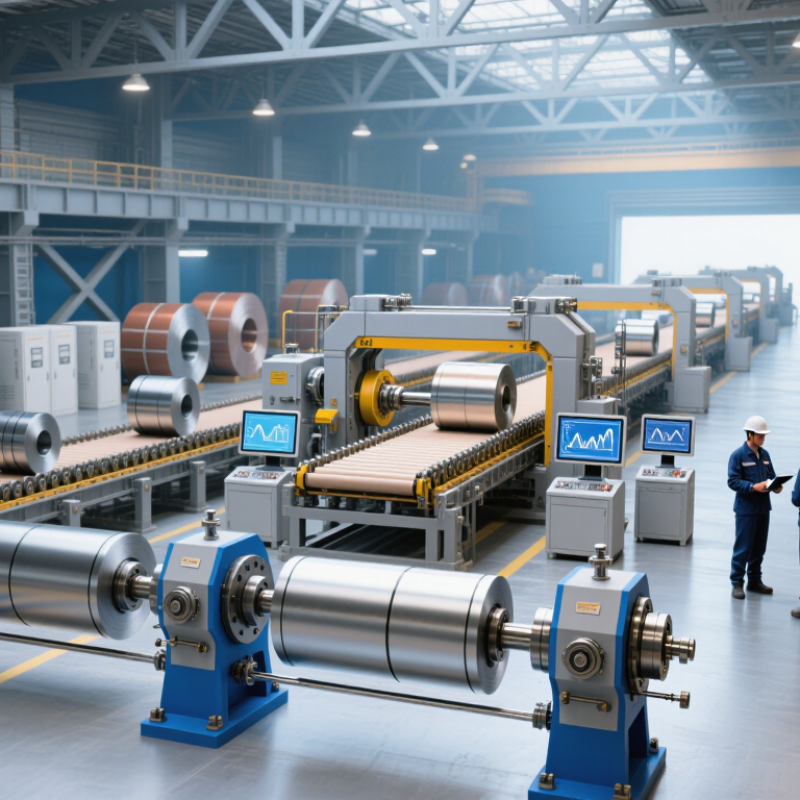
China’s electric mill roll stands serve plate, strip, bar, wire, and section rolling lines. Demand remains substantial. The World Steel Association reports that China produced about 1,019 million tonnes of crude steel in 2023. This scale supports broad domestic manufacturing experience, but capacity alone does not prove engineering quality.
Two-high stands remain practical for bar and roughing operations. Their open structure simplifies roll changes and maintenance. Four-high stands add backup rolls, reducing work-roll deflection during strip production. Six-high stands provide stronger shape control for thinner materials. Universal stands combine horizontal and vertical rolls, helping form sections with fewer passes. Tandem arrangements connect several stands for continuous high-speed rolling.
AC motors suit many modern lines because they offer stable speed control and regenerative potential. Reversing stands need precise acceleration and braking during repeated passes. Hydraulic screwdown can work beside electric main drives, although this hybrid design is sometimes described too simply as an electric stand. That distinction matters during procurement.
ISO 13849 principles can guide safety-related control design, while ISO 50001 supports energy management reviews. A supplier should provide load records, alignment results, and commissioning data. Brochures rarely show enough. Real mill conditions are messier. A stand rated for maximum force may still perform poorly with unstable material temperature or weak maintenance planning.
Chinese roll stand manufacturers increasingly combine electric drive systems with precise mechanical structures. The practical goal is stable rolling under changing strip tension and temperature. Servo motors control screwdown movement with fine positioning accuracy. Encoders continuously measure roll-gap movement and motor speed. Load cells detect rolling force before small deviations become visible defects.
Programmable logic controllers coordinate speed, pressure, lubrication, and emergency responses. Industrial communication networks transfer data between drives, sensors, and the operator panel. Some systems also use thermal compensation to reduce gap errors during long production runs. At the line, these details matter. A fraction of a millimeter can affect thickness consistency.
Experienced manufacturers test stands under simulated load, not only during idle operation. Engineers inspect vibration, gearbox temperature, braking response, and sensor drift. Predictive maintenance software can flag unusual current or bearing behavior. However, no control system is perfect. Dust, electrical noise, and poor calibration still create misleading signals. I have found that basic checks sometimes reveal more than advanced software. Reliable suppliers therefore combine factory testing with commissioning support, operator training, and documented calibration procedures. Their technical credibility depends on repeatable results, clear data, and honest attention to limitations.
China Top Electric Mill Roll Stand Manufacturers
China’s electric mill roll stand sector serves a large and demanding steel market. The World Steel Association reported 1,888.2 million tonnes of crude steel production worldwide in 2023. China contributed about 1,019.1 million tonnes. This scale requires stable equipment, repeatable machining, and disciplined quality control.
Leading manufacturers usually combine heavy fabrication with precision processing. Typical capabilities include CNC machining, stress-relieved welding, gear alignment, hydraulic testing, and non-destructive inspection. Engineers should verify load calculations, roll-neck tolerances, motor response, and vibration behavior. Factory acceptance tests should record mill speed, torque, temperature, and emergency-stop performance. ISO 9001-based procedures improve traceability, but certification alone proves little.
Energy performance also deserves attention. The International Energy Agency’s Energy Technology Perspectives 2024 identifies industry as responsible for roughly 37% of global final energy consumption. Efficient electric drives, regenerative braking, and accurate control systems can reduce avoidable losses. However, claimed savings need measured operating data. A polished brochure is not enough. Some production lines still overlook cable routing, maintenance access, or spare-part interchangeability. That gap deserves scrutiny. Buyers should request material certificates, inspection records, calibration results, and documented corrective actions. Reliable suppliers explain failures openly and improve designs after field feedback. That is where manufacturing standards become practical, rather than decorative.
China Top Electric Mill Roll Stand Manufacturers
How to Evaluate a Chinese Electric Mill Roll Stand Supplier
China’s steel industry produced about 1,005 million tonnes of crude steel in 2024, according to the World Steel Association. That scale creates strong manufacturing experience, but production volume alone proves little. An electric mill roll stand supplier should show verified torque curves, positioning accuracy, duty-cycle results, and emergency-stop performance. I would request a complete test record, not a polished brochure.
Check the motor, gearbox, screw system, encoder, and control cabinet as one system. Ask whether the stand maintains alignment under maximum rolling force. Review factory acceptance testing against IEC 60204-1 and ISO 13849-1 requirements. Energy data also matters. The International Energy Agency identifies industrial motors as major electricity users, so suppliers should provide measured consumption at several loads. Small details count.
Visit the assembly area if possible. Look for calibrated tools, serial-number tracking, spare-parts control, and technicians who can explain failure patterns. Request references from comparable rolling lines, with operating hours and maintenance records. A lower quotation may hide weaker bearings, limited cooling, or costly commissioning. I have seen specifications that looked complete but omitted acceleration limits. That omission matters. Require written guarantees for response time, alignment tolerance, software access, and after-sales support. Do not trust promises without test evidence. Supplier evaluation is partly technical, partly uncomfortable judgment.
| No. | Evaluation Dimension | What to Verify | Practical Reference or Acceptance Criteria | Suggested Weight | Score 1–5 | Recommended Evidence |
|---|---|---|---|---|---|---|
| 1 | Application and Load Capability | Check whether the roll stand is designed for the required strip width, roll diameter, rolling force, torque, and production speed. | The supplier should provide calculations showing rated load, maximum load, roll opening, reduction range, and continuous-duty operating limits for the specific mill layout. | 15% | 1–5 | Signed technical proposal, load calculation, GA drawing, and duty-cycle description. |
| 2 | Electric Drive and Control System | Review motor sizing, variable-speed control, braking, torque control, PLC communication, and emergency-stop functions. | The design should state motor power, rated torque, speed range, overload capability, control voltage, communication protocol, and compatibility with the customer’s automation system. | 15% | 1–5 | Motor and drive datasheets, electrical schematic, I/O list, control philosophy, and interface test plan. |
| 3 | Mechanical Accuracy and Rigidity | Assess stand-frame stiffness, roll alignment, bearing arrangement, screw-down accuracy, and resistance to deflection. | Dimensional tolerances, alignment values, backlash, flatness, and parallelism should be defined on approved drawings rather than described only as “high precision.” | 12% | 1–5 | Inspection plan, material certificates, machining records, alignment report, and final dimensional report. |
| 4 | Customization and Engineering Capability | Determine whether the supplier can adapt the stand to existing mill foundations, pass-line height, roll dimensions, utilities, and automation. | A capable supplier should identify interface risks before quotation and issue a complete design package covering mechanical, electrical, hydraulic, lubrication, and safety interfaces. | 10% | 1–5 | Preliminary layout, interface matrix, foundation loads, utility list, and design-review minutes. |
| 5 | Safety and Regulatory Compliance | Evaluate guarding, interlocks, emergency stops, lockout provisions, electrical protection, and risk assessment. | The safety design should address applicable requirements such as ISO 12100 for machinery risk assessment and IEC 60204-1 for electrical equipment of machines. | 10% | 1–5 | Risk assessment, safety-circuit drawings, conformity documents, inspection checklist, and operating manual. |
| 6 | Manufacturing Quality and Traceability | Review process control for steel castings, forgings, machining, heat treatment, welding, assembly, and purchased components. | Important load-bearing parts should have traceable material records and documented inspection points. A certified ISO 9001 quality system is a positive indicator but does not replace product inspection. | 10% | 1–5 | Quality certificate, process flow chart, inspection and test plan, nonconformity procedure, and sample records. |
| 7 | Factory Acceptance Testing | Confirm that the supplier can test mechanical movement, electrical functions, control logic, noise, vibration, and safety circuits before shipment. | The FAT protocol should include customer-approved test steps, measured results, punch-list closure, and preservation procedures for transport. | 8% | 1–5 | FAT procedure, test reports, calibration certificates, photographs, and signed acceptance records. |
| 8 | Lead Time and Project Control | Assess engineering schedule, procurement risks, production milestones, factory testing, packing, and shipment readiness. | The quotation should separate design approval, manufacturing, FAT, export packing, and delivery milestones instead of providing only one total lead-time figure. | 6% | 1–5 | Detailed project schedule, milestone responsibilities, procurement list, and delay-management procedure. |
| 9 | After-Sales Service and Spare Parts | Check installation support, commissioning, troubleshooting response, training, spare-parts availability, and documentation. | The supplier should provide recommended start-up spares, critical spare-part codes, maintenance intervals, troubleshooting procedures, and clearly defined service responsibilities. | 6% | 1–5 | Service organization chart, spare-parts list, warranty terms, training plan, and escalation contacts. |
| 10 | Commercial Value and Contract Clarity | Compare total cost of ownership rather than purchase price alone, including installation, commissioning, spare parts, energy use, and downtime risk. | The offer should clearly define scope of supply, exclusions, payment terms, warranty period, performance guarantees, delivery terms, and change-order rules. | 8% | 1–5 | Itemized quotation, technical-commercial deviation list, warranty statement, and draft purchase contract. |
| Total Suggested Evaluation Weight | 100% | Weighted score = Σ (criterion score ÷ 5 × criterion weight) | ||||
China Top Electric Mill Roll Stand Manufacturers
Electric mill roll stands support accurate metal processing in demanding production environments. They position and drive rolls through controlled electric motors. This design suits plate, strip, bar, and wire rolling lines.
In strip mills, electric roll stands adjust roll gaps during changing thickness. They help maintain flatter surfaces and more consistent dimensions. Operators can control rolling speed with fewer manual corrections. This reduces sudden tension changes between stands. It also supports faster product changes. Short setup times matter.
Plate mills use these stands for heavy reductions and controlled reversing passes. Electric drive systems deliver strong starting torque under substantial loads. In bar and wire processing, synchronized stands help maintain stable dimensions at high speeds. Sensors can monitor load, position, temperature, and vibration. These signals support preventive maintenance before wear becomes a costly failure.
Precision is not automatic. A small encoder error can affect the final gauge. Poor alignment may create uneven roll wear. Energy savings also depend on correct motor sizing and control settings. Oversized equipment can waste power, while undersized drives may overheat. That trade-off deserves careful engineering.
Maintenance teams should inspect couplings, bearings, cables, and cooling systems regularly. Dust and scale can enter vulnerable areas. A robust stand still needs disciplined operation. Sometimes, simpler control is more reliable than excessive automation. The best application depends on material grade, rolling force, line speed, and maintenance capability.
Typical entry-temperature windows for hot-rolling applications using electrically driven mill roll stands.
Electric mill roll stands provide controlled roll speed, torque, and pass-line stability in hot-strip, plate, bar, and non-ferrous rolling operations. The temperature ranges shown are representative industrial processing windows; actual settings depend on alloy grade, product size, reduction schedule, and furnace practice.
No, I will think about it in future.


