




2026 How to Choose the Right Solar Energy System for Your Home?

Choosing the right solar energy system for your home can be overwhelming. With so many options available, it’s crucial to consider several factors. Each home is unique, which means that a one-size-fits-all solution often falls short.

Begin by assessing your energy needs. How much electricity does your household consume? This will help you determine the system size you require. The solar energy system should not only meet your current demands but also accommodate future growth. Location also matters. Certain regions receive more sunlight, making solar energy systems more efficient there.

A key challenge is balancing cost and efficiency. Some systems are cheap but might not offer the best return on investment. Consider long-term savings against initial expenses. Additionally, explore financing options carefully. Tax credits and rebates can significantly affect the final price. We often overlook these details but they are essential. Understanding these factors can lead to better choices. Your solar energy system should reflect your values and needs, today and in the future.
2026 How to Choose the Right Solar Energy System for Your Home?

Understanding Your Energy Needs and Usage Patterns

Understanding your energy needs is crucial when choosing a solar energy system for your home. According to the U.S. Energy Information Administration, an average American household consumes about 877 kWh per month. This number varies significantly based on location, size, and usage patterns. For instance, families with high energy consumption, such as those using electric heating or multiple appliances, will require a larger solar system.

Analyzing your energy usage patterns is equally important. Start by reviewing your monthly electricity bills over the past year. Identify peak usage months. Seasonal changes can result in varying needs. A study from the National Renewable Energy Laboratory suggests that homes with solar energy systems can significantly cut costs, but only if appropriately sized.

Addressing common oversights is key. Many homeowners underestimate their energy needs or fail to account for future increases, like adding a home office or electric vehicle. This could lead to inadequate solar capacity and missed savings. Investing in energy efficiency upgrades before installation can optimize system performance. Tracking and adjusting your energy habits can lead to a better alignment with your solar system's capabilities.

Evaluating Different Types of Solar Energy Systems Available

Choosing the right solar energy system involves understanding the various options available. Each type has unique features that cater to different needs and preferences. Photovoltaic (PV) systems convert sunlight directly into electricity. They are ideal for homes with ample roof space. These systems can significantly reduce utility bills over time.

Another option is solar thermal systems, which utilize sunlight to heat water. This can greatly benefit households that consume a lot of hot water. However, these systems might require additional space and maintenance. Battery storage systems are also becoming popular. They allow homeowners to store excess energy for later use. This can be especially helpful during power outages.

It’s essential to consider local climate and energy needs. Some areas receive more sunlight, making PV systems more efficient. In contrast, regions with fluctuating weather may need more adaptable solutions. Assessing the initial investment versus long-term savings can be tricky. The right choice may not be immediately clear. Engaging with local professionals can help in navigating these options.

Considering Your Home's Location and Sunlight Exposure

When choosing a solar energy system, it's crucial to consider your home's location and sunlight exposure. A good starting point is to evaluate how many sunny days your area receives each year. Homes in sunny regions receive more solar energy, which can significantly impact system efficiency. In contrast, homes in cloudy or shaded areas may struggle to yield optimal energy production.

Location also affects installation choices. Roof angle and orientation play a major role in maximizing sunlight capture. A south-facing roof typically performs best, while roofs with obstructions may require creative solutions. Think about nearby buildings or trees that might cast shadows. You might need a larger system to compensate for these blocks.

Another aspect to reflect on is seasonal variations. Some places experience significant changes in sunlight throughout the year. This fluctuation can influence how much energy you generate during different months. Be aware of this when designing your system. You could end up overestimating or underestimating energy needs. Each detail matters, so do thorough research before making a decision.

Assessing Budget and Financial Incentives for Solar Installations

When choosing a solar energy system, budget is a top concern. According to the Solar Energy Industries Association, the average cost of solar panel installations in 2022 was about $2.77 per watt. Prices can vary based on region and system size. Understanding local financial incentives helps maximize savings. For example, the Federal Investment Tax Credit allows you to deduct 26% of installation costs from your taxes, but this percentage will decrease in 2023. This tax benefit can significantly lower upfront expenses.

Tip: Estimate your energy needs. Calculate past electricity bills to determine how much solar power you require. This step ensures you choose a system that fits your energy consumption.

Consider additional financing options. Solar loans and leasing programs provide pathways for many homeowners. Some setups require little to no upfront payment. However, it’s crucial to read the terms carefully. Hidden fees or high interest may offset the benefits.

Tip: Research state incentives. Many states offer grants, rebates, or tax credits. These can make solar energy more accessible. Always check eligibility requirements and application deadlines to avoid missing out.

Choosing the Right Installer for Your Solar Energy System

2026 How to Choose the Right Solar Energy System for Your Home?

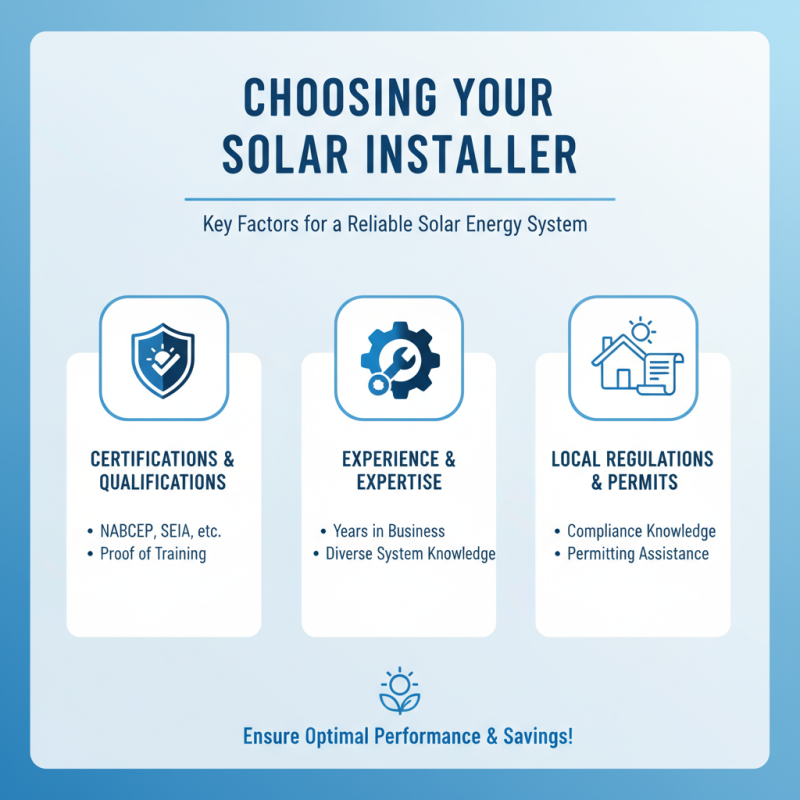
Choosing the right installer for your solar energy system is crucial. A competent installer ensures proper installation, which directly affects system performance. Look for installers with proper certifications. They should have experience with solar technology and local regulations.

Tip: Check online reviews and testimonials. Customer feedback often reveals the quality of service provided by an installer. Compare multiple quotes before making a decision. This helps you understand the average pricing in your area.

Some installers might promise quick results but could lack quality. Don't rush into a decision based on low prices alone. Ask for references and follow up with previous clients to gauge satisfaction. It's essential to find someone who is thorough and reliable. Always trust your instincts when choosing.

© 2025 Australian Premium Solar