Top Solar Inverter Types for Efficient Energy Conversion?
In the realm of solar energy, the efficacy of energy conversion largely hinges on the type of solar inverter utilized. Experts like Dr. Emily Johnson, a renowned figure in renewable energy technology, assert, "The right solar inverter can significantly improve the system's performance and longevity." This emphasizes how crucial it is to select the appropriate equipment.
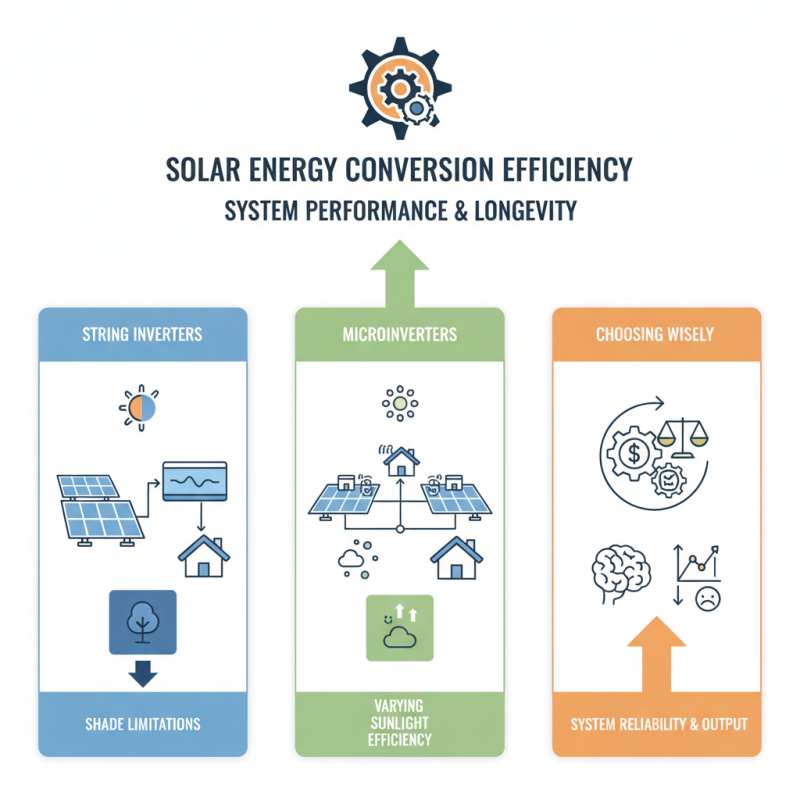
Solar inverters come in various types, each designed for specific applications and settings. String inverters, for example, are popular for residential installations due to their simplicity. However, they may face limitations in shaded areas. Meanwhile, microinverters offer improved efficiency in scenarios with varying sunlight conditions.
Understanding these intricacies is essential when choosing a solar inverter. It is not only about cost, but also about how well the system performs in different conditions. Some homeowners may overlook the finer details, gravitating towards cheaper options. The choice of solar inverter can make a substantial difference, impacting both energy output and system reliability.
Types of Solar Inverters: An Overview
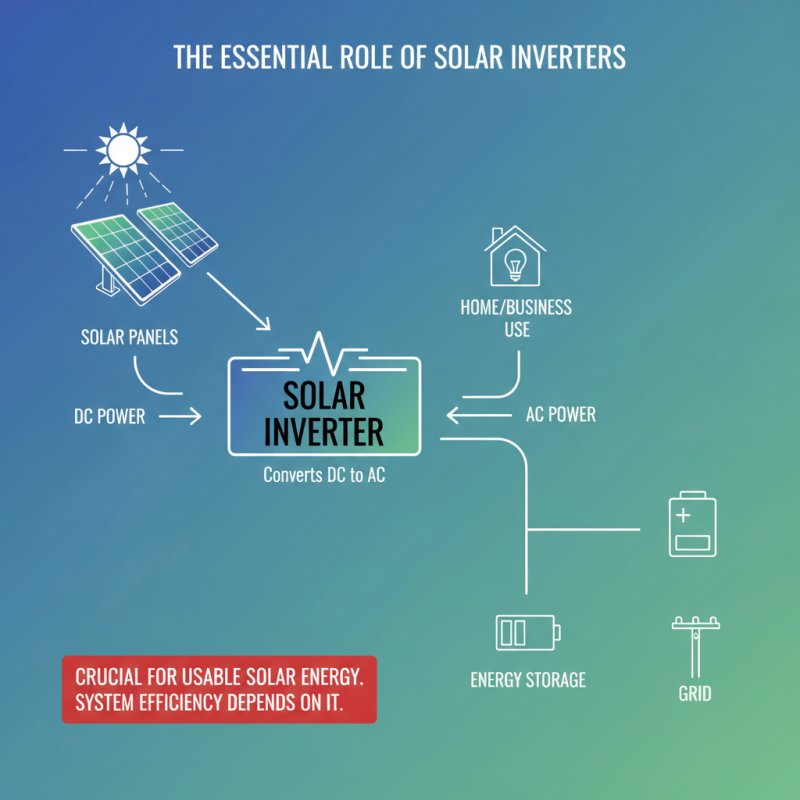
Solar inverters play a crucial role in converting the direct current (DC) generated by solar panels into alternating current (AC). This transformation is essential for powering homes and businesses. There are several types of solar inverters, each with its unique advantages and disadvantages. Choosing the right one can significantly impact energy efficiency and system performance.
String inverters are commonly used in residential installations. They connect multiple solar panels in a series. This design is cost-effective, but it has a downside. If one panel's performance declines due to shading, the entire string's output can drop. So, maintaining an unobstructed environment is vital for their effectiveness.
Microinverters, on the other hand, are mounted on each solar panel. They allow for more individualized performance monitoring. This type can perform better in varied conditions, such as partial shading. However, microinverters can be more expensive to install. The balance between cost and performance must be evaluated carefully. There are also power optimizers, which assist string inverters by optimizing the energy output of each panel individually. They offer a middle ground but still have limitations. Choosing the right inverter requires thoughtful consideration of your specific needs and conditions.
Functionality of Solar Inverters in Energy Conversion
Solar inverters play a crucial role in energy conversion in solar energy systems. They convert direct current (DC) generated by solar panels into alternating current (AC), which is commonly used in homes and businesses. This conversion is essential for making solar energy usable. Without a reliable inverter, the entire system cannot function efficiently.
Different types of solar inverters exist in the market, each with unique functionality. String inverters are common in residential setups, connecting all panels in a series. However, if one panel is shaded, it affects the whole string’s performance. This limitation can lead to inefficiencies and make people reconsider their options.
On the other hand, microinverters allow each panel to operate independently. This setup offers better energy yield, especially in varied sunlight conditions. Yet, microinverters can be more costly and complicated to install, which raises questions about their practicality for some users. Choosing the right inverter is essential for maximizing energy conversion, but it's not a one-size-fits-all solution. Each choice brings its own set of challenges and benefits.
Comparative Analysis: String Inverters vs. Microinverters
When choosing solar inverters, understanding the differences is crucial. String inverters are popular for their efficiency and simplicity. They connect multiple solar panels together in a series. This setup is cost-effective and easy to install. Reports indicate that they account for roughly 80% of the market share in the solar inverter sector. However, their performance depends heavily on the panels’ orientation and shading. A single shaded panel can reduce the output of the entire string.
Microinverters, on the other hand, offer distinct advantages. They attach to individual solar panels, enhancing energy production. Research shows that microinverters can increase energy harvest by 10-25%, especially in partially shaded conditions. They also allow for real-time monitoring of each panel’s performance. This granularity can help identify issues quickly. Yet, microinverters typically come at a higher initial cost, which can be a barrier for some homeowners.
While both options have drawbacks, they cater to different needs. String inverters may be ideal for larger installations with uniform sunlight exposure. Microinverters suit environments where shading or varying orientations are common. Each choice requires careful consideration of the installation site’s characteristics.
Top Solar Inverter Types for Efficient Energy Conversion
| Inverter Type |
Efficiency (%) |
Cost ($/kW) |
Installation Complexity |
Warranty (Years) |
Optimal Use Case |
| String Inverter |
95 - 98 |
600 - 1000 |
Moderate |
5 - 10 |
Residential & Commercial |
| Microinverter |
95 - 97 |
1000 - 1500 |
High |
10 - 25 |
Shaded Roofs & Small Installations |
| Power Optimizer |
96 - 98 |
700 - 1200 |
Moderate |
5 - 25 |
Large Installations with Varied Sunlight |
The Benefits of Power Optimizers in Solar Systems
Power optimizers play a crucial role in solar systems. They enhance energy output, increasing efficiency. Each solar panel can perform at its best, regardless of shading or orientation. This feature is particularly helpful in urban areas where buildings can cast shadows.
These devices minimize power loss. Without them, shaded panels drag down the performance of the entire system. It’s like having a race car held back by a single, less powerful car. The mismatch can cost homeowners energy and money. Power optimizers help bring balance to the system, allowing for a more effective energy conversion process.
However, not every installation benefits equally from power optimizers. Homeowners should assess their specific needs and conditions. Sometimes, the additional cost may not justify the benefits. Taking time to evaluate is crucial. Ultimately, understanding these details can lead to better decisions for sustainable energy use.
Choosing the Right Solar Inverter for Your Needs
Choosing the right solar inverter is essential for maximizing your energy efficiency. Different types of inverters serve various needs. For example, string inverters are simple and cost-effective. They work well for small systems with minimal shading. If your roof has obstacles, consider micro-inverters. They optimize energy production for each panel, improving overall output.
Power optimizers can also be a suitable choice. They amplify the performance of individual panels while using a central inverter. This setup is ideal for larger installations with varying panel orientations. Hybrid inverters are gaining popularity too. They can manage energy from both solar panels and battery systems, providing more flexibility for energy storage.
It’s crucial to evaluate your specific requirements. Consider the size of your solar system, location, and energy goals. Efficiency is vital, but so is cost. Don’t overlook warranty and reliability. An inverter is a significant investment. Research thoroughly to make an informed decision. Balancing features and budget may lead to compromises. Reflect on your priorities as you choose.