





Choosing the best Solar Batteries made in China requires more than comparing prices on a product page. Real performance depends on chemistry, system design, safety controls, and after-sales support.
China leads global battery manufacturing, with companies such as CATL, BYD, EVE Energy, Gotion, Pylontech, Dyness, and Sungrow serving different market segments. Some focus on large commercial storage. Others build modular batteries for homes, farms, and small businesses. Lithium iron phosphate, or LFP, is widely preferred because it offers strong thermal stability and long cycle life.
As energy analyst Michael Liebreich has said, “The battery is the Swiss Army knife of the energy transition.” That comparison is useful, but incomplete. A battery is only valuable when it works reliably with the inverter, solar panels, monitoring platform, and local grid requirements.
This guide examines Chinese Solar Batteries through practical criteria. These include usable capacity, round-trip efficiency, warranty terms, protection systems, installation quality, and independent certifications. It also considers temperature performance and replacement support.
A low purchase price can hide important costs. Integration problems happen.
The “best” battery is not always the largest or cheapest model. A compact home system may need simple expansion and quiet operation. A commercial site may prioritize high throughput, remote monitoring, and rapid service response. Manufacturer reputation matters, but supplier transparency matters too. Public specifications can be incomplete, and warranty language deserves careful reading.
The comparisons ahead aim to remain balanced, evidence-based, and practical for buyers. No shortlist is flawless.
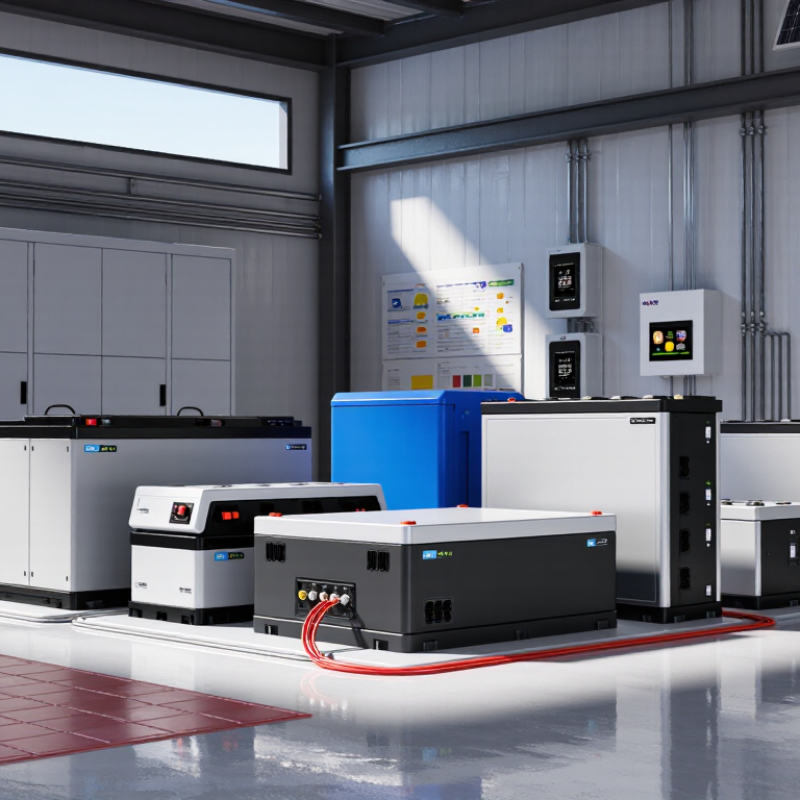
China’s solar battery manufacturing industry is broad, but quality varies between factories. Its main strength is coordinated production. Cell makers, battery management suppliers, cabinet producers, and testing laboratories often operate within connected industrial clusters. This structure can shorten development cycles and control costs. However, a low price does not automatically indicate dependable storage.
When evaluating the best solar batteries made in China, I examine chemistry, traceability, thermal design, and service capacity. Lithium iron phosphate remains common in stationary systems. It balances safety, cycle life, and usable capacity. A reliable manufacturer publishes efficiency figures, temperature ranges, warranty terms, and degradation assumptions. Real figures matter. Factory quality also depends on cell inspection, weld consistency, insulation, and software testing. During an audit, serial labels, busbars, and fire barriers may reveal more than polished brochures. Compliance with relevant IEC testing requirements also deserves careful checking.
Chinese producers are investing in automated assembly, recycling research, and sodium-ion technology. Yet automation cannot fix weak specifications or poor after-sales support. Installers should verify independent test reports, electrical compliance, monitoring security, and replacement procedures. One uncomfortable lesson is that quoted cycle counts may reflect gentle laboratory conditions, not daily rooftop use. I would request field data from similar climates and compare it with the warranty’s small print. Some documentation remains incomplete. That deserves scrutiny.
What Are the Best Solar Batteries Made in China?
The strongest Chinese solar batteries commonly use lithium iron phosphate (LFP) cells. LFP offers strong thermal stability, long cycle potential, and lower material costs than nickel-based chemistries. BloombergNEF reported an average global battery-pack price of 115 dollars per kilowatt-hour in 2024. China’s average was lower, at 94 dollars per kilowatt-hour. This figure covers battery packs broadly, not every residential storage system.
The key technology is the battery management system, or BMS. It monitors voltage, temperature, current, and cell balance continuously. A reliable BMS can prevent overheating and reduce uneven aging. Many systems also use liquid cooling, prismatic cell designs, and high-voltage architectures. These features support safer operation in hot outdoor cabinets. The International Energy Agency reported that global battery-storage additions reached about 42 gigawatts in 2023, nearly doubling from the previous year. Demand is accelerating.
Cycle-life claims need careful checking. A laboratory result may not reflect dust, poor ventilation, partial charging, or winter temperatures. That is where specifications become less impressive. Buyers should examine usable capacity, warranty conditions, round-trip efficiency, and degradation testing. Chinese manufacturers are also developing sodium-ion batteries, which may reduce reliance on lithium. However, their commercial maturity and energy density still vary. The best technology is not automatically the newest one.
What Are the Best Solar Batteries Made in China?
Chinese solar battery manufacturers produce several important chemistries for homes, farms, and commercial systems. Lithium iron phosphate, or LFP, is widely selected for residential storage. It offers strong thermal stability, long cycle life, and consistent daily performance. Its heavier structure can reduce energy density, but safety often matters more than compact size.
Nickel manganese cobalt batteries provide higher energy density and can fit projects with limited installation space. However, they need careful thermal management and reliable battery controls. Lead-acid batteries remain useful for budget systems and simple backup applications. They usually require more maintenance and tolerate fewer deep cycles. Sodium-ion batteries are also emerging. They may perform well in colder conditions, although their market availability and long-term field data still need closer review.
Tips: Check usable capacity, not only the advertised capacity. Ask for cycle-life testing at your expected temperature and discharge rate. Confirm protection against overcharging, overheating, and deep discharge. Installation quality matters greatly. A well-designed battery can still underperform if cables, ventilation, or monitoring are poorly selected. I would also compare warranty terms carefully, because impressive specifications do not always reflect real household conditions. There is no perfect chemistry. The best choice depends on climate, daily energy use, backup priorities, and available installation space.
A quality solar battery made in China should be judged by evidence, not its country of origin. The International Energy Agency reported that China held more than 80% of global battery cell manufacturing capacity in 2023. That scale supports supply depth, but it does not guarantee consistent workmanship. Ask for cell traceability, factory audit records, cycle-life test conditions, and an independent test report. A claimed 6,000 cycles means little without the stated depth of discharge, temperature, and remaining capacity.
Safety deserves closer attention. The National Renewable Energy Laboratory identifies thermal runaway, poor installation, and inadequate monitoring as major stationary-storage risks. Look for documented testing under UL 9540A, clear spacing instructions, over-temperature protection, and a battery management system that records abnormal events. The International Energy Agency also notes that lithium-ion battery costs fell sharply in 2023, but lower prices can reflect chemistry, warranty limits, or reduced testing. Cheap is not automatically efficient.
Performance should be measured in usable kilowatt-hours, round-trip efficiency, response time, and cold-weather behavior. BloombergNEF’s 2023 battery price survey placed average lithium-ion pack prices at 139 dollars per kilowatt-hour, yet residential systems often cost far more after inverters and installation. I would compare at least three laboratory reports. One missing temperature test is a warning. A perfect datasheet is not proof; field records, service response, and warranty exclusions often reveal the real quality.
| Evaluation Dimension | Recommended Benchmark | Why It Matters | What to Verify in Technical Documents |
|---|---|---|---|
| Battery Chemistry | Lithium iron phosphate (LFP / LiFePO4) for most stationary solar-storage systems | LFP offers strong thermal stability, long cycle life, and good suitability for frequent daily cycling. | Cell chemistry, cathode material, cell format, and whether the cells are new, matched, and traceable. |
| Usable Energy | At least 90% of the stated nominal capacity at the specified test conditions | Usable energy determines how much solar power can actually be stored and delivered. | Nominal capacity, rated depth of discharge, test temperature, charge/discharge current, and end-of-life capacity definition. |
| Cycle Life | Approximately 4,000–8,000 cycles to 70%–80% remaining capacity, depending on test conditions | A higher verified cycle life can reduce the lifetime cost of energy in daily-use applications. | Cycle test protocol, depth of discharge, ambient temperature, charge rate, discharge rate, and warranty capacity threshold. |
| Round-Trip Efficiency | Typically about 85%–95% for a complete battery system, depending on inverter and auxiliary loads | Higher efficiency means less stored energy is lost during charging and discharging. | Whether the figure is DC-to-DC or AC-to-AC, the test power level, standby consumption, and inverter losses. |
| Continuous Power Output | Common residential systems provide approximately 0.5C continuous output, subject to the battery design | Power rating determines whether the battery can run household loads, pumps, motors, or backup circuits. | Continuous and peak power ratings, duration of peak output, inverter limits, and high-temperature derating. |
| Battery Management System | Independent monitoring and protection for cell voltage, temperature, current, balancing, and state of charge | A well-designed BMS helps prevent overcharge, over-discharge, overheating, excessive current, and cell imbalance. | Protection thresholds, balancing method, event logs, communication protocols, firmware update process, and fault response. |
| Thermal Safety | LFP cells, temperature sensors, current protection, and controlled installation clearances | Thermal management reduces the risk of overheating and helps maintain performance in demanding conditions. | Thermal propagation testing, over-temperature shutdown, cooling design, installation manual, and emergency procedures. |
| Safety Certifications | Applicable testing under standards such as IEC 62619, IEC 63056, UL 1973, or UL 9540, depending on the market | Independent certification provides evidence that the product has undergone recognized electrical and safety testing. | Certificate number, issuing laboratory, exact model covered, validity, test scope, and regional compliance requirements. |
| Transportation Compliance | UN 38.3 testing for lithium battery transport | Compliance supports safer and legally compliant shipping by air, sea, road, or rail. | UN 38.3 test summary, safety data sheet, packaging instructions, dangerous-goods classification, and shipping limits. |
| Ingress Protection | At least IP54 for protected indoor equipment; IP65 or higher is commonly preferred for outdoor enclosures | The enclosure rating indicates resistance to dust and water under defined test conditions. | IP test report, enclosure construction, cable-entry protection, condensation control, and installation limitations. |
| Operating Temperature | Typical discharge range: about −20°C to 50°C; charging may be restricted below 0°C without heating | Temperature affects available capacity, charging safety, cycle life, and power output. | Charge and discharge temperature limits, low-temperature charging protection, heating system, and power derating curve. |
| Scalability | Parallel expansion with clearly defined limits and compatible battery modules | Modular systems can increase storage capacity as household demand or solar generation grows. | Maximum parallel units, module age-matching rules, busbar protection, communication architecture, and commissioning procedure. |
| Inverter Compatibility | Documented compatibility with the selected hybrid inverter and communication interface | Compatibility affects charging control, state-of-charge accuracy, backup operation, and fault handling. | CAN or RS485 protocol, approved inverter list, communication settings, firmware versions, and grid-code support. |
| Warranty Structure | A clearly written warranty commonly covering a defined period, cycle count, throughput, and minimum remaining capacity | Warranty terms show how the manufacturer defines acceptable degradation and provides support. | Warranty duration, capacity retention, throughput limit, exclusions, claim process, labor coverage, and service location. |
| Quality Control and Traceability | Documented production controls with serial-number traceability from cell to finished battery | Traceability helps identify production batches, verify consistency, and manage warranty or safety issues. | Factory quality certificates, incoming-cell inspection, end-of-line test records, batch numbers, and sample test reports. |
| Lifetime Cost | Compare cost per usable kilowatt-hour over the expected service life, not only the purchase price | A lower initial price may not provide better value if efficiency, usable capacity, support, or cycle life is weaker. | Installed cost, usable capacity, efficiency, degradation, maintenance, replacement terms, and expected annual cycling. |
Choosing the best Chinese solar battery starts with your household’s actual energy pattern. A large battery is not always better. A family using 10 kWh each evening may need different storage from a rural workshop. Review daily consumption, peak loads, solar output, and backup priorities before comparing prices.
Lithium iron phosphate chemistry is often a practical choice for home storage. It offers strong thermal stability and a long service life. Check the usable capacity, not only the advertised capacity. Confirm whether the battery works with your existing inverter. Voltage range, communication protocols, and maximum charging current can decide compatibility. Small details matter here. Ask for independent safety testing and clear certification records.
Manufacturing quality can vary between Chinese suppliers, even when specifications look similar. Examine cell grading, battery management software, enclosure protection, and cooling design. A residential unit should include reliable overcharge, over-discharge, and temperature protection. The warranty should explain cycle limits, capacity retention, repair procedures, and shipping responsibility. Local technical support is valuable when an alarm appears during a winter outage. Do not choose solely by the lowest quotation. I have seen specifications hide assumptions about temperature and charging speed. Those assumptions deserve written clarification. No checklist is perfect. An experienced installer should inspect the wiring, ventilation, mounting surface, and emergency shutdown arrangement before commissioning.
No, I will think about it in future.


