




Best Solar Panel System for Home in 2026?

Choosing the best solar panel system for home in 2026 starts with your household, not a headline efficiency rating. A south-facing roof may perform differently from one shaded by a chimney or a tall maple. Even a few hours of afternoon shade can change expected production. Small details matter. Review twelve months of electricity bills, then compare your usage with the system’s estimated annual output. Ask how the estimate accounts for roof direction, seasonal weather, panel degradation, and local utility rules. These figures should be transparent, not presented as guaranteed savings.

A dependable system typically combines appropriately sized panels, an inverter, sound mounting hardware, and monitoring you can actually use. Battery storage may help during outages or when evening electricity costs more, but it adds expense and is not essential for every home. There is no universal winner. Compare written proposals, equipment warranties, workmanship coverage, and projected costs over time. Confirm that an installer has relevant experience and can explain maintenance, permitting, and interconnection requirements in your area. A second quote can reveal assumptions that one proposal leaves unclear. It is tempting to focus on the lowest upfront price; pause there. The cheapest design may omit useful protections, while a premium package may exceed your needs. Solar estimates also depend on future rates and household habits, both uncertain. Treat any payback period as a scenario, not a promise. This guide examines system types, sizing, batteries, and costs, helping you judge what fits your roof and budget—not just what sounds impressive.
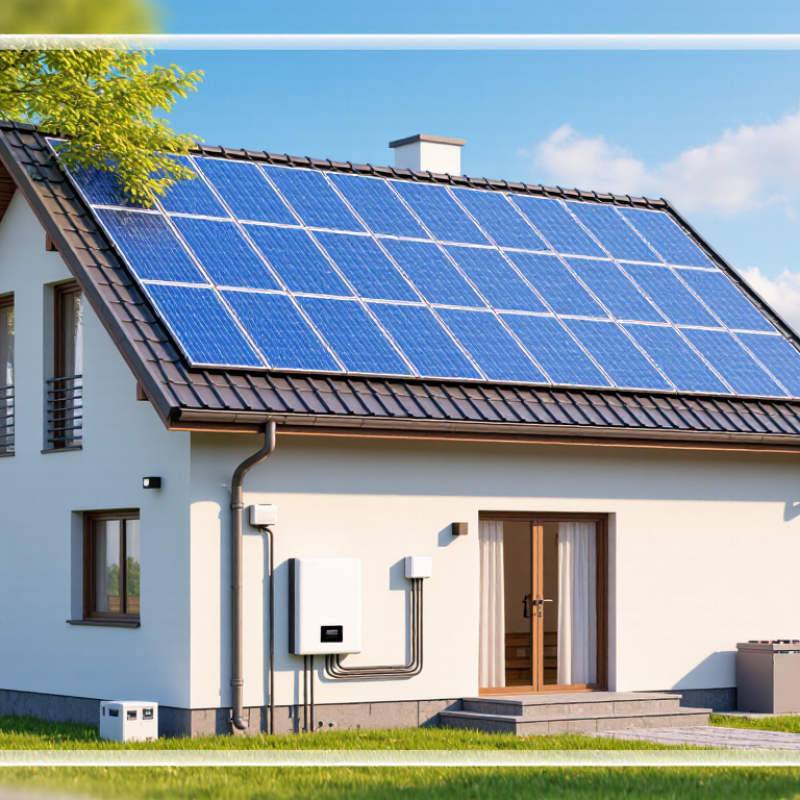
Best Solar Panel System for Home in 2026?

How Home Solar Panel Systems Work in 2026

How Home Solar Panel Systems Work in 2026

A home solar system turns sunlight into electricity you can use. Panels on the roof produce direct current, or DC. An inverter changes it into alternating current, or AC, for household appliances. Your refrigerator, lights, and laptop draw power from the home circuit as needed. On a bright afternoon, the panels may produce more electricity than the house uses. That extra power may flow to the grid, depending on your system and local utility rules.

After sunset, a grid-connected home usually draws electricity from the grid. A battery can store some daytime production for later, but it adds cost and needs careful sizing. Monitoring software shows energy production and household use, though estimates are not perfect. Shade from a chimney, dust, roof direction, and seasonal daylight all affect output. Not always. A larger system is not automatically a better fit; household use and roof conditions matter.

Tips: Check a year of electricity bills before comparing system sizes. Ask how the estimate accounts for shade, winter production, inverter losses, and battery storage. Have roof condition and electrical equipment assessed by a qualified professional. Small details can change the numbers.

How to Assess Your Home’s Energy Use and Solar Potential

A sound solar plan starts with your electricity use, not a panel count. Gather twelve months of utility bills and note each month’s kilowatt-hour use. Look for summer air-conditioning peaks, winter heating loads, and changes after adding appliances or an electric vehicle. Small details matter. A recent bill may not represent your usual year, so compare the full record.

Next, assess the roof and nearby surroundings. Note its usable area, direction, slope, and any shade from chimneys, trees, or neighboring buildings. A shadow crossing one section at noon can reduce production more than a quick glance suggests. Check for roof repairs that may be needed before installation. Online solar maps can offer a useful estimate, but they cannot fully show local shade or roof condition.

Compare expected production with your actual usage, including when you use power. A household that uses most electricity after sunset may value storage differently from one with daytime demand. Ask for estimates based on your roof, local weather, and recent bills, and review the assumptions behind them. I would not treat any single estimate as a promise; small site details can shift the result. A qualified site assessment can help clarify those uncertainties.

How to Compare Panels, Inverters, and Battery Options

Choosing a home solar system starts with your roof, not a sales estimate. Note its direction, pitch, usable area, and shade at different times. A chimney shadow at 4 p.m. can affect output more than a small difference in panel ratings. Compare panel power, efficiency, degradation estimates, product coverage, and the assumptions behind each quote. Bigger numbers are not always better.

The inverter converts panel electricity into usable household power. String inverters can suit simple roofs; module-level electronics may help where shade or roof angles vary. Ask how the design handles outages, because many grid-connected systems shut down during a blackout unless configured for backup. Check the inverter’s rated capacity against the panel array and expected household loads. Small details matter.

A battery should match actual evening use, not an impressive capacity figure. Compare usable kilowatt-hours, continuous output, round-trip efficiency, warranty terms, and backup capability. List essentials such as a refrigerator, lights, and internet router, then estimate how long they need power. Not every home needs storage. Be cautious about assuming it will pay for itself; tariffs, export rules, weather, and usage all affect the calculation. Request itemized quotes and an estimated annual production range, not a single guaranteed number. Have a qualified installer review roof condition and electrical requirements. Imperfect estimates happen. Ask what could change them.

Best Solar Panel System for Home in 2026? — How to Compare Panels, Inverters, and Battery Options

There is no single best system for every home. Compare equipment against your roof, electricity use, utility rules, outage needs, and budget. The figures below are general residential-market ranges; specifications vary by model and location.

Residential Solar Equipment Comparison
Component Option Typical specifications Main advantages Trade-offs and checks Often a good fit for
Solar panels Monocrystalline silicon Many current residential modules are roughly 400–450 W, with module efficiencies commonly around 20–23%. High output per roof area; widely available in residential system designs. Compare tested power, dimensions, temperature coefficient, product warranty, and performance warranty—not wattage alone. Most homes comparing conventional rooftop solar options.
Solar panels Higher-efficiency module Typically at the upper end of the residential efficiency range; exact performance depends on the module design and conditions. Can provide more capacity where usable roof space is limited. May cost more. Confirm that the added output justifies the price and fits the roof layout. Small roofs, complex roof layouts, or homes with limited suitable area.
Solar panels Standard-efficiency module Often offers a lower cost per module; compare the actual watts and efficiency listed on the product datasheet. Can deliver good value when roof area is ample and the system is properly sized. More modules may be needed for the same system capacity, requiring additional roof space and mounting hardware. Homes with ample, unshaded roof area and a focus on upfront value.
Inverter String inverter Converts DC from a panel string to household AC. Published peak conversion efficiencies for many models are approximately 97–99%. Usually a straightforward, cost-effective design; equipment is typically located in one accessible place. Panels on the same string can be affected by shading or differing orientations. Check design limits and replacement coverage. Simple roofs with similar panel orientations and little shading.
Inverter Module-level microinverters One inverter is installed at or near each panel; published peak efficiencies commonly fall in the mid-to-high 90% range. Panels operate independently, which can help on roofs with multiple orientations or partial shading. Panel-level monitoring is often available. More devices are installed on the roof; compare equipment warranties, service access, and system cost. Complex roofs, partial shading, or homeowners who want panel-level monitoring.
Inverter Hybrid inverter Combines solar and battery-control functions; compatibility depends on the inverter, battery, and system design. Can simplify a new solar-plus-storage installation and coordinate charging and discharging. Check battery compatibility, backup capability, power limits, and whether the design can be expanded later. New systems where a battery is planned now or in the near future.
Battery Lithium iron phosphate (LFP) Common in home storage products. Usable capacity and continuous power are product-specific; many systems are modular, with units in the several-kWh range. Widely used for stationary storage; modular systems can allow capacity to be matched to household needs. Compare usable—not just nominal—capacity, continuous and surge power, warranty terms, operating temperature, and installation requirements. Households seeking evening energy use or backup, subject to system compatibility.
Battery Other lithium-ion chemistries Capacity, power, efficiency, and cycle-life specifications vary by product and chemistry. Can provide compact energy storage and may be integrated with compatible solar equipment. Do not compare chemistry names alone; review independent certifications, warranty conditions, and usable capacity. Buyers comparing complete, certified storage systems from different equipment categories.
Battery No battery Solar energy is used in the home when generated; excess energy may be exported depending on utility rules. Lower initial equipment cost and fewer components to maintain. Standard grid-connected solar generally does not provide backup during a grid outage unless designed with approved backup equipment. Homes with reliable grid service, favorable export rules, or a preference for lower upfront cost.
System design Solar only Panel capacity should be based on annual electricity use, roof conditions, and local utility compensation rules. Can reduce grid purchases without the added cost of storage. Production varies by season, weather, shading, and system orientation; annual output is not guaranteed by module wattage alone. Homes focused primarily on reducing annual electricity bills.
System design Solar plus battery backup Battery size should reflect the loads to be backed up, desired backup duration, and the battery’s usable energy and power ratings. Can supply selected or, with an appropriately sized system, broader household loads during outages. Backup duration depends on load, weather, battery state of charge, and solar production. Confirm which circuits remain powered and whether the system can recharge during an outage. Homes that experience outages or value backup for selected essential loads.

Before choosing a system, request a site-specific design and compare itemized quotes. Verify local permitting and interconnection requirements, equipment certifications, warranty coverage, installer workmanship terms, and the utility’s export-credit rules.

How to Evaluate System Costs, Incentives, and Warranties

Choosing a home solar system in 2026 starts with the numbers on your electricity bill, not a panel’s advertised output. Compare quotes using the same system size, estimated annual production, and assumptions about roof shade. Ask whether the price includes permitting, wiring, monitoring, and any needed electrical upgrades. Those details can turn a low quote into a more expensive project.

Look beyond the upfront price. Compare the cost per installed watt, financing charges, and projected savings using cautious electricity-rate assumptions. Incentives may change, and eligibility can depend on your location and household circumstances. Verify current rules with official government sources or a qualified tax professional before counting an incentive as guaranteed savings. Small print matters. A battery may add resilience, but it also raises the initial cost; consider how often outages affect your home.

Read each warranty separately. Product coverage protects against certain equipment defects, while performance coverage concerns how much a panel’s output may decline over time. Workmanship coverage addresses installation problems, so check who handles claims and whether labor is included. Ask for the warranty terms in writing. A spreadsheet helps, but estimates are still estimates; shading, weather, and actual household use can differ. Review the assumptions before signing, especially the expected annual production and any costs excluded from the quote.

How to Select and Plan a Solar Installation for Your Home

A useful solar plan starts with your electricity bills, not a panel count. The U.S. Energy Information Administration reports that residential customers used an average of about 10,791 kilowatt-hours in 2022. Your household may differ sharply. Check twelve months of bills, including summer air-conditioning peaks and winter heating demand. Then compare those loads with a site-specific production estimate from NREL’s PVWatts tool, which uses location, weather, and system details. Estimates are not guarantees.

Walk the roof at different times of day. A chimney shadow at noon, aging shingles, or a north-facing section can change the design. Ask an installer to document roof condition, shading, equipment location, and expected annual output. Also confirm the electrical panel can accommodate the proposed system. Small details matter. Battery storage is most useful when backup power is a priority; it does not automatically improve every project’s finances.

Compare proposals using the same system size, estimated production, and assumptions about utility compensation. The EIA reported a U.S. average residential electricity price of 16.41 cents per kilowatt-hour in 2023, but local rates and export credits vary. That difference can reshape payback. Read the assumptions closely. An early estimate may look precise while missing future roof work, household changes, or seasonal production gaps. Ask for the calculations, not just the headline savings.

Best Solar Panel System for Home in 2026? Plan Your Solar Installation

Illustrative monthly electricity production for a 5 kW home solar system

This planning example estimates about 6,570 kWh per year from a 5 kW system, assuming an average of 4.5 peak sun hours per day and an 80% system performance ratio. Compare estimated annual production with your household’s yearly electricity use when considering system size. Actual output varies with location, roof direction, shading, weather, and equipment losses; use a local site assessment for a personalized estimate.

© 2025 Australian Premium Solar